
Traffic isn't your problem. The leaks in your funnel are.
A fixed-scope audit of where sessions actually drop between view, add to cart, checkout, and purchase. Page-level opportunities, a competitor teardown, and a three-layer roadmap, built on funnel data we validate first.
Definition
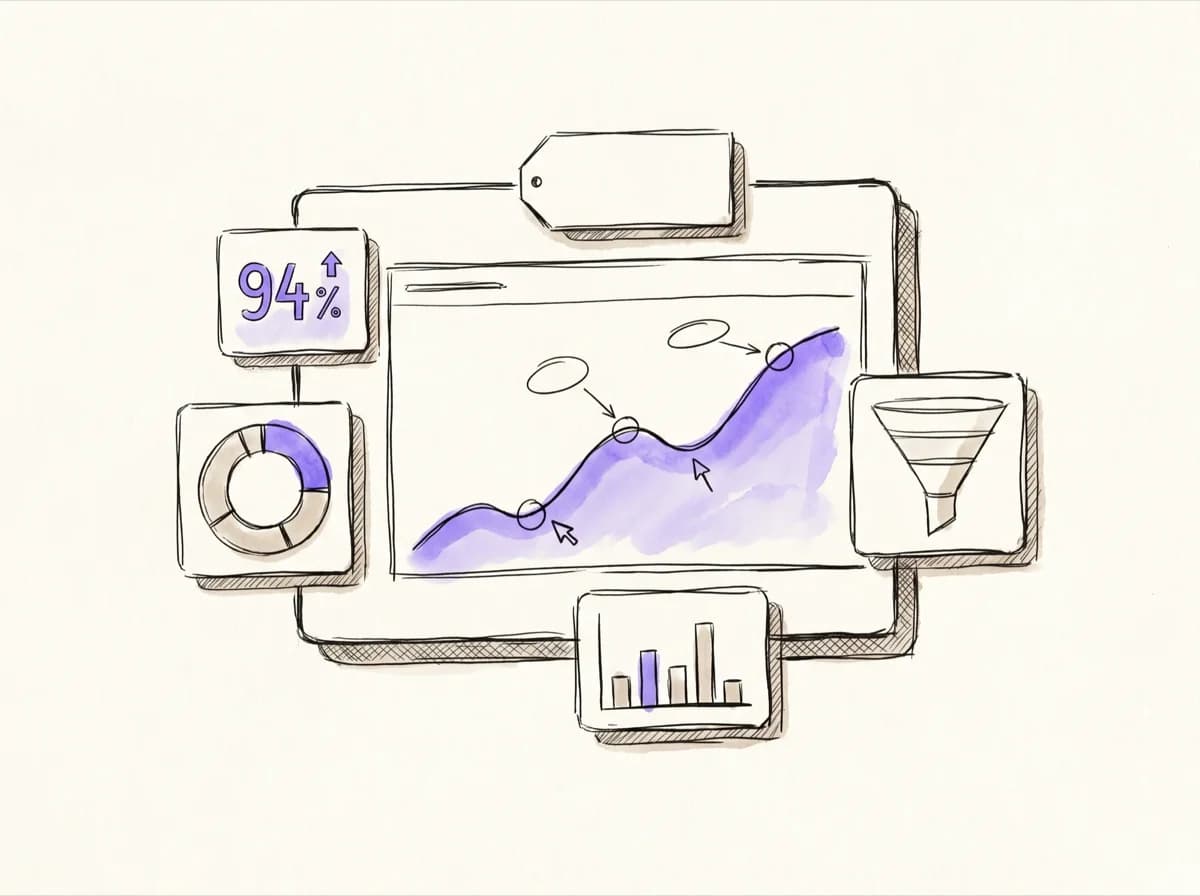
What is an ecommerce CRO audit?
An ecommerce CRO audit is a structured diagnosis of why a store's traffic does not turn into orders. It measures the drop-off at every funnel step, from product view to add to cart to checkout to purchase, identifies which steps leak abnormally, and diagnoses the cause: page experience, offer clarity, friction, trust, or tracking that hides the real picture. A proper audit also reviews the highest-revenue pages individually, walks the same funnel on competitors to find where shoppers get a better reason to buy elsewhere, and ranks every opportunity into a three-layer roadmap of quick wins, structural fixes, and strategic builds. Anlyto delivers this as a fixed-price engagement with read-only access, and validates the funnel data before drawing any conclusion, because CRO recommendations built on broken tracking fix the wrong things. The output is a founder-readable deck and a ranked roadmap.
How the CRO audit is built
What you get
A diagnosis, not a list of best practices
Anyone can tell you to add trust badges. The audit tells you which step of your funnel leaks, why, what it costs you in orders, and what to fix first.
Funnel drop-off diagnosis
Your full funnel from view to purchase, with the drop-off at each step measured and the abnormal leaks diagnosed.
- View to ATC to checkout to purchase
- Benchmark-informed read per step
- Leak diagnosis, not just rates
Page-level opportunity analysis
The pages that carry your revenue, reviewed one by one: PDPs, collections, cart, and the paths shoppers actually take.
- PDP and collection review
- Mobile-first experience read
- Opportunity sized per page
Checkout friction review
Where shoppers stall between cart and payment: shipping surprises, form friction, trust gaps, and payment options.
- Cart to purchase step analysis
- Shipping and returns framing
- Trust and payment coverage
Data validation
Before any conclusion, we check the funnel events are real. If tracking is hiding the leak, we say so instead of guessing.
- Funnel event reliability check
- Tracking-vs-behavior separation
- Honest confidence levels
Competitor teardown
The same funnel walked on relevant competitors, so you see exactly where shoppers get a better reason to buy elsewhere.
- Offer and PDP comparison
- Shipping and returns framing
- Checkout flow comparison
Three-layer opportunity roadmap
Every opportunity ranked into quick wins, structural fixes, and strategic builds, each with an impact and effort read.
- Quick wins first
- Structural fixes scoped
- Strategic builds framed
Sound familiar?
The patterns we see most often
Most conversion problems show up as one of a few recognizable patterns. The pattern tells you where to look, the audit tells you what is actually causing it and how much it is worth fixing.
And sometimes the leak is not in the funnel at all, it is in the measurement. A checkout that looks broken in GA4 can be a tracking gap, not a UX problem. That is why every conclusion in the audit is tied to validated data, and why the Tracking Audit pairs so naturally with this one.
Common leak patterns
- Strong traffic but a weak product-view to add-to-cart rate
- Healthy ATC rate that collapses at checkout
- Mobile converting far below desktop
- High cart abandonment with shipping cost as the silent killer
- Discount-dependent conversion masking a weak offer
- AOV flat while sessions grow, a merchandising problem hiding as a traffic problem
How it runs
From funnel data to ranked roadmap
Fixed scope, read-only access, and conclusions only where the data supports them.
Kickoff + access
A 30-minute call on your funnel, offers, and known pain, then read-only access to analytics and your store.
Validate + measure
Funnel events checked for reliability, then drop-off measured at every step from view to purchase.
Diagnose + compare
Page-level review of the money pages, friction diagnosis per leak, and the competitor teardown.
Roadmap + walkthrough
Three-layer opportunity roadmap ranked by impact and effort, presented live in a founder-readable deck.
Pricing and next step
Fixed-price, from $500
The CRO Audit is fixed-price from $500 with a fixed turnaround. It is part of our audit family, and is included in the Performance Audit bundle alongside tracking, paid media, and reporting.
After the audit, most brands work through the roadmap with their own team or continue with us through a retainer, where funnel changes are shipped, measured, and iterated on numbers we trust.
How we de-risk it
Four promises, in writing, on every engagement
We sell verification for a living, so the way we work has to survive it too.
Audit fee credited
Continue into implementation within 60 days and the audit fee comes off the project price. The diagnosis is never a sunk cost.
Nothing goes live without your sign-off
We never publish to your container, account, or store without your approval. Every change is staged, reviewed, and reversible.
Loom walkthrough handoff
Every engagement ends with a recorded walkthrough of what was built, how it works, and how to check it yourself. Rewatch it anytime.
30-day correction guarantee
If anything we implemented misreports within 30 days of handoff, we fix it free. No ticket, no invoice, no argument.
FAQ
CRO audit questions
How we find the leaks, what the roadmap looks like, and what happens after.
Find out where your checkout leaks most
Book a 30-minute discovery call. We'll look at your funnel together, flag the obvious leaks, and send a fixed quote inside two business days.
Continue reading
Related audits and next steps
- Read more
Tracking Audit
CRO conclusions are only as good as the funnel data underneath them. If your numbers don't reconcile, start here.
- Read more
Performance Audit
The CRO audit plus tracking, paid media, and reporting in one engagement, with a 90-day prioritized growth roadmap.
- Read more
Conversion Rate Optimization
Ship the roadmap with us: funnel changes made, measured, and iterated on data you trust, as a project or ongoing program.
Published
Last reviewed