
Before you buy AI, find out if your data can support it.
An AI readiness assessment for ecommerce teams. We map how each function works today, score your data, process, people, and tooling, then rank the automation opportunities by the manual hours they actually remove.
Definition
What is an AI readiness assessment?
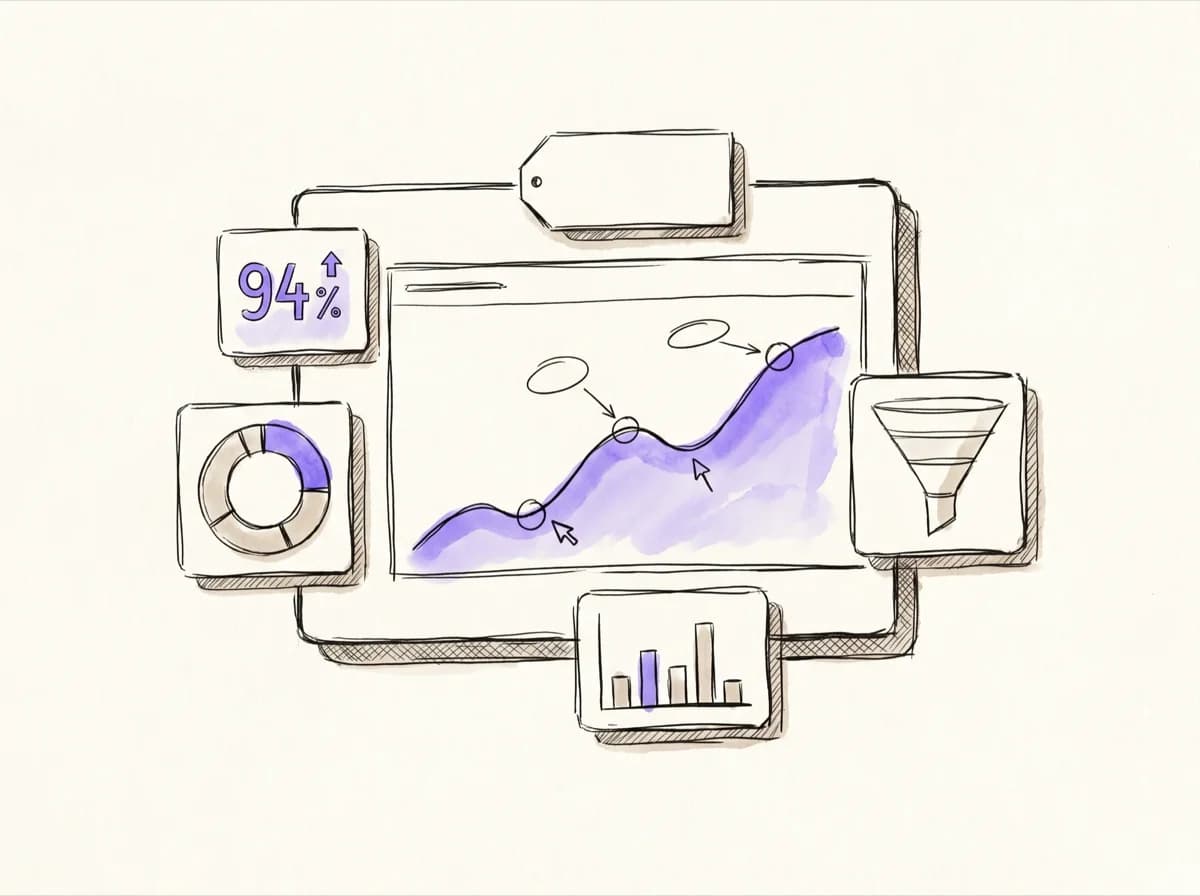
An AI readiness assessment is a structured review of whether a business can get real value from AI yet, and where. It scores four things: data readiness, meaning whether the information a model or agent would need is accessible, accurate, and complete; process readiness, meaning whether the work is repetitive and structured enough to hand over; people readiness, meaning whether the team would adopt and verify the output rather than work around it; and tooling readiness, meaning whether the existing stack can be connected without a rebuild. The output is a readiness score for each function plus a ranked list of opportunities, sequenced by the manual hours each one removes against the effort to implement it. It is deliberately different from an AI compliance audit, which examines AI systems already in production for bias and regulatory conformity. A readiness assessment is what you run before building anything.
Why pilots stall
Most AI projects fail on the data, not the model
The model is rarely the hard part now. What stops an AI project is that the data it needs is scattered across systems that disagree with each other, or that the process it was meant to automate turns out to have five undocumented exceptions, or that the team never trusted the output. We assess all four layers because the failure almost always comes from the ones nobody checked.
Data readiness
Whether the information an AI system would need actually exists, is accessible, and reconciles. This is where most AI projects quietly fail, and it is the layer we assess for a living.
- Source and system inventory
- Accuracy and completeness check
- Access and integration review
Process readiness
How the work is really done, including the manual steps nobody has written down. Repetitive, rule-based, high-volume work is where automation pays. Judgement-heavy work usually is not.
- Function-by-function workflow map
- Manual hours quantified
- Automation suitability scored
People readiness
Who would use the output and whether they would trust it. An automation the team works around costs more than the manual process it replaced.
- Interviews with the people doing the work
- Adoption risk flagged
- Verification steps designed in
Tooling readiness
What your stack can already do. A meaningful share of what teams want to build is sitting switched off inside software they already pay for.
- Existing stack capability review
- Integration feasibility
- Buy, switch on, or build
Why an analytics firm
The bottleneck is usually a data problem wearing an AI costume
Most AI consultants arrive with a catalogue of use cases and work backwards to your business. We arrive from the other direction. Assessing whether data is accurate, complete, and reconciled is the work we have done across 120+ audits, and it is the layer that decides whether an AI project ships or quietly dies in a pilot.
That also means we will tell you when the answer is not yet. If your order data does not reconcile against your store, no agent built on top of it will produce answers you can act on, and the honest recommendation is to fix that first.
What you get
Readiness score per function
Each function scored against the four pillars, with a plain explanation of what is holding the score down and what would have to change to raise it.
Ranked opportunity list
Every opportunity ranked by manual hours removed against effort to implement, split into switch it on, connect it up, and build it.
What not to automate
The list of things that look like automation candidates and are not, with the reason. Knowing what to leave alone saves more money than most pilots make.
Data prerequisites
Where the data underneath a promising opportunity is not good enough yet, and exactly what would need fixing first. This is the part generalist AI consultants tend to miss.
How it works
Scope, map, score, sequence
A fixed-scope engagement that ends with a ranked roadmap you keep, whoever builds from it.
Scope the functions
A short call to decide which parts of the business are in scope. We start where the manual load is heaviest rather than assessing everything at once.
Map how work happens now
Interviews with the people doing the work, plus a review of the systems involved. The goal is the real process, including the spreadsheet steps that never made it into any documentation.
Score readiness
Each function scored against data, process, people, and tooling, with the evidence behind every score written down so you can challenge it.
Rank and sequence
A ranked opportunity list with hours saved, effort, dependencies, and prerequisites, presented live so your team can push back before anything is committed.
How we de-risk it
Four promises, in writing, on every engagement
We sell verification for a living, so the way we work has to survive it too.
Audit fee credited
Continue into implementation within 60 days and the audit fee comes off the project price. The diagnosis is never a sunk cost.
Nothing goes live without your sign-off
We never publish to your container, account, or store without your approval. Every change is staged, reviewed, and reversible.
Loom walkthrough handoff
Every engagement ends with a recorded walkthrough of what was built, how it works, and how to check it yourself. Rewatch it anytime.
30-day correction guarantee
If anything we implemented misreports within 30 days of handoff, we fix it free. No ticket, no invoice, no argument.
FAQ
AI readiness questions
What teams ask before committing to an assessment.
Find out where AI would actually help
Book a 30-minute discovery call. We'll talk through where your team loses hours, tell you whether an assessment is worth it yet, and scope it to the smallest version that would change a decision.
Continue reading
Related audits and next steps
- Read more
Tracking Audit
If the assessment finds your data is the blocker, this is where the fix starts: what is captured, what is broken, and what it costs you.
- Read more
Reporting & Dashboards
A BigQuery warehouse is the foundation most AI opportunities need. Clean, joined data is the prerequisite, not the nice-to-have.
- Read more
Performance Audit
The full measurement picture: tracking, CRO, paid media, and reporting in one engagement with a 90-day roadmap.
Published
Last reviewed